There's something instantly calming about a room filled with greenery.
But if your furniture clashes with the plants, the space can feel chaotic instead of cozy.
Pairing furniture with plants isn't just about placement—it's about creating a visual flow and a sense of balance. The right combination makes your home feel intentional, fresh, and full of life.
Consider Proportions and Scale
The first step in pairing furniture and plants is understanding the scale of both. Oversized plants next to tiny chairs can overwhelm a room, while tiny succulents on a large dining table may look lost.
Tips for balance:
Match plant size with furniture height – A tall fiddle leaf fig complements a floor lamp or a high-backed chair, creating a balanced visual weight.
Use grouping to fill space – A collection of small potted plants on a low shelf can mimic the impact of a single large plant, providing greenery without dominating the room.
Adjust placement for harmony – Avoid crowding corners. Position medium-sized plants next to mid-height furniture, like a sideboard or sofa, to create natural transitions in height.
Choose Furniture Materials That Complement Greenery
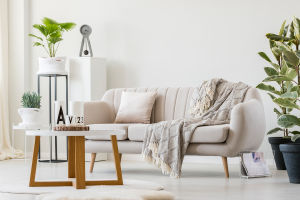
The texture and material of your furniture affect how plants integrate into the room. Natural elements like wood and rattan pair beautifully with greenery, while sleek metal or glass can create a more modern contrast.
Material ideas:
Wood tones for warmth – Light oak tables or walnut shelves create a warm backdrop for leafy plants, emphasizing their natural vibrancy.
Metal and glass for contrast – Black metal frames or glass surfaces allow green foliage to pop, giving a modern, airy feel.
Textured fabrics – Linen, cotton, or velvet upholstery adds softness that complements the organic shapes of plants. For instance, a linen armchair next to a cascading pothos feels inviting and relaxed.
Color Coordination
Color plays a key role in tying furniture and plants together. Think of plants as living accent colors that can either harmonize or contrast with your décor.
Practical color tips:
Neutral backdrops – White, beige, or gray furniture allows plants to stand out as focal points. A dark green monstera leaf looks stunning against a light gray sofa.
Complementary tones – Choose furniture colors that echo the shades of plant leaves. Deep greens pair well with earthy browns, while variegated plants can brighten darker furniture.
Accent repetition – Repeat small green elements throughout the room. For example, a green vase on a coffee table mirrors the color of larger potted plants, creating cohesion.
Functional Placement
Aesthetics matter, but function is equally important. Placement should consider accessibility, light, and usage of furniture.
Placement strategies:
Near natural light – Place light-loving plants like snake plants or ferns near windows. Pair them with furniture that doesn't block sunlight, like a low console table.
Create focal points – Use plants to highlight furniture. A tall plant behind a sofa draws attention to the seating area, making it a natural centerpiece.
Avoid traffic interference – Ensure plants don't obstruct walkways or seating areas. For example, a small potted plant on a side table is perfect, while a large plant in a narrow passage can feel cramped.
Layering and Styling
Layering plants with furniture adds depth and visual interest. Think of plants as accessories that enhance the room's story.
Styling techniques:
Vary heights – Combine floor plants, tabletop plants, and hanging plants. A tiered arrangement adds dimension without cluttering.
Mix textures – Pair spiky plants like sansevieria with soft-leaved plants like calathea. The contrast keeps the space lively and engaging.
Decorate surfaces – Use plant pots that match or complement furniture finishes. A ceramic planter on a wooden shelf or a metal planter next to a leather chair integrates plants seamlessly.
Pairing furniture with indoor plants is a creative balance of scale, material, color, and placement. By observing proportions, selecting complementary materials, coordinating colors, and strategically placing greenery, you can create a harmonious environment that feels alive yet structured. Start small with one corner or a single statement plant, and gradually layer in more as you refine the flow. When furniture and plants work together, every room becomes a breathing, inviting space that reflects care and personality.