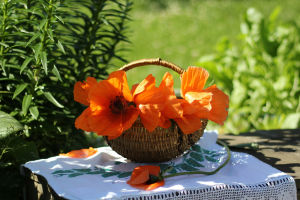
A quiet moment often reveals more than expected: a desk by a window, a glass vase, and a small bouquet brought home after a long day.
Nothing in the room changes structurally, yet the atmosphere feels different almost immediately. That shift is not abstract; it comes from how the human brain interprets color, form, and environmental cues.
Flowers, in particular, act as concentrated visual signals that can gently influence emotional states through color perception.
Red flowers and emotional intensity
Red flowers tend to capture attention first. Their visual strength creates an immediate sense of presence, often associated with heightened alertness and emotional activation. This does not mean agitation, but rather a rise in mental engagement with the environment.
In practical daily settings, red flowers can influence how a space is experienced:
1. On a work desk, a small red arrangement can help maintain focus during short, high-effort tasks.
2. In a shared living space, red tones may encourage more active social interaction and conversation flow.
3. As a single accent in a neutral room, red prevents the environment from feeling visually flat or stagnant.
The key characteristic of red is its intensity. When used in moderation, it can create energy and direction. When overused, however, it may become visually dominant, reducing the sense of balance in the space.
Yellow flowers and mental brightness
Yellow flowers often create a feeling of openness and lightness. This color is commonly associated with mental clarity and a subtle lift in mood, especially in environments that feel repetitive or visually heavy.
In everyday environments, yellow flowers can play several roles:
1. Near natural daylight, they enhance morning routines by making spaces feel more awake and structured.
2. In communal areas, they can soften emotional tension and support a more relaxed atmosphere.
3. On desks or reading tables, they reduce visual fatigue during extended concentration periods.
Yellow does not overwhelm the senses. Instead, it provides a steady brightness that supports cognitive ease. This makes it especially useful in spaces where long periods of attention or interaction are required.
Blue flowers and emotional quiet
Blue flowers shift the emotional tone toward calm reflection. Their cooler visual temperature tends to slow down perception, encouraging a more inward-focused state of mind.
This effect can be observed in different environments:
1. In resting areas, blue arrangements help create a more settled evening atmosphere.
2. In reading corners, they support longer, uninterrupted focus by reducing visual stimulation.
3. In shared spaces, they can soften emotional intensity during quiet conversations.
Blue does not demand attention. Instead, it provides space for thought. This quality makes it suitable for environments designed for recovery, reflection, or sustained concentration.
White flowers and emotional clarity
White flowers introduce a sense of simplicity and visual order. While they do not strongly influence mood in one direction, they create a neutral foundation that allows other colors and objects to stand out more clearly.
Their influence often appears in subtle ways:
1. In compact rooms, white flowers reduce visual complexity and create a sense of openness.
2. Near entrances or transitional spaces, they convey freshness and organization.
3. When combined with stronger colors, they act as a stabilizing element that prevents emotional overload.
White functions less as an emotional driver and more as a balancing presence. It helps maintain clarity in environments where multiple visual elements coexist.
Balancing floral colors in daily spaces
The emotional impact of flowers is rarely defined by a single color alone. More often, it emerges from how different tones interact within a shared space. A thoughtful combination can create environments that feel both dynamic and stable.
A simple approach to balance includes:
1. Choosing one dominant color to define the general emotional direction of the space.
2. Adding a secondary color to introduce contrast and variation.
3. Using white as a stabilizing element to maintain visual coherence.
This layered approach allows a space to feel emotionally responsive without becoming visually overwhelming. It also reflects how people naturally experience environments—not as isolated colors, but as shifting combinations of light, tone, and attention.
Over time, these subtle visual interactions accumulate. A flower on a desk, a vase on a shelf, or a small arrangement near a window can quietly influence daily rhythm. The effect is not immediate or dramatic, but it becomes part of how a space is lived in and remembered, shaping mood in ways that often go unnoticed until they are missing.